Feature: Collab central at the 2026 UROP Mixer
Featured in November 2026 newsletter
On the afternoon of Oct. 28, two floors of W20 buzzed with students’ questions and conversation about the more than 100 research projects featured at the second annual Institute-wide Undergraduate Research Opportunities Program (UROP) Mixer, which was co-hosted by the Offices of the Provost and Chancellor.
Students packed the expo-style event, often stopping to line up at long tables to read posters, watch demonstrations, and talk with researchers from across the Institute and beyond. Faculty and research mentors pitched their UROP projects to students on an array of topics, such as dexterous manipulation of multifingered robotic hands, an interactive AI virtual orchestra designed to accompany a pianist, and innovations in immunoengineering.
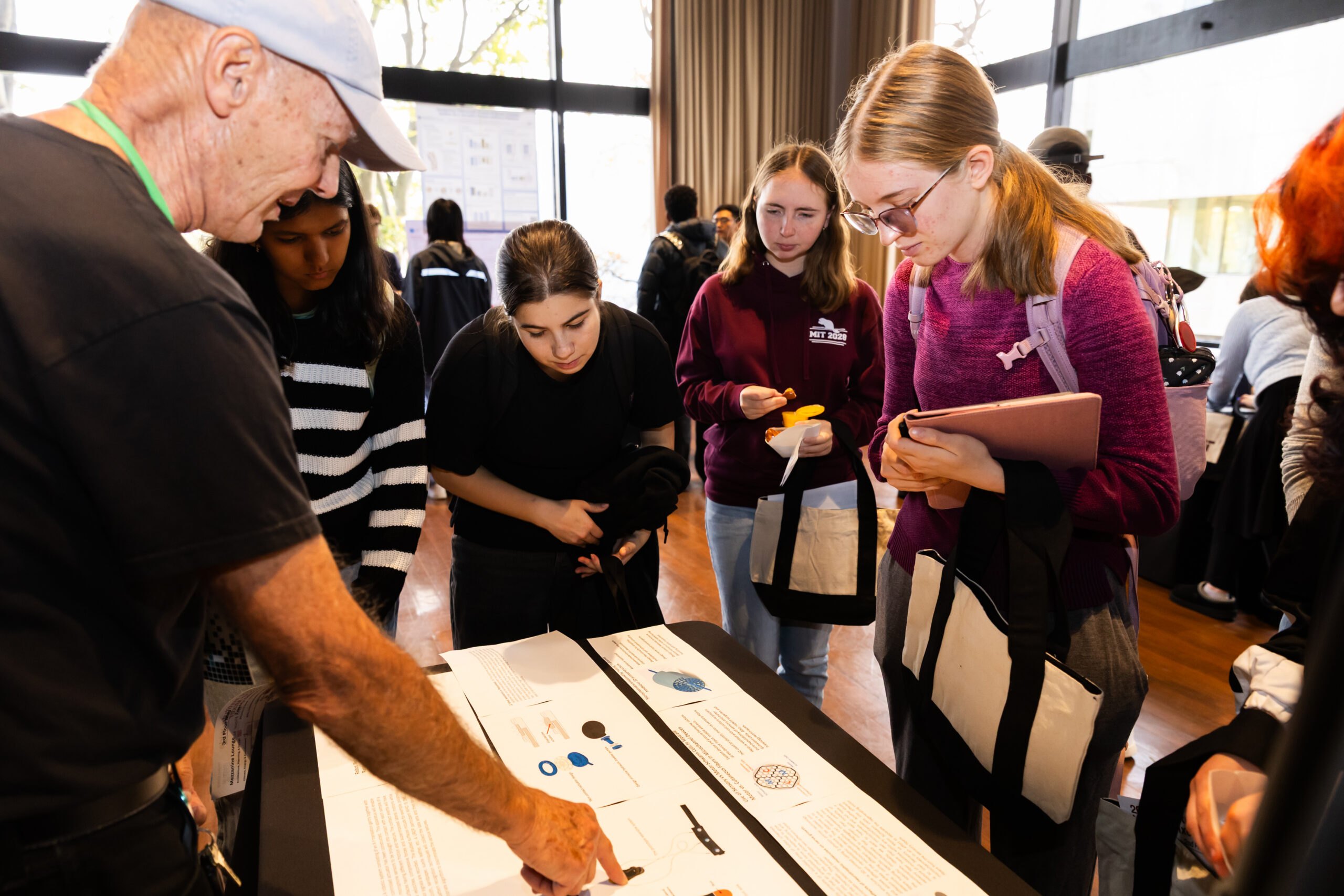
For Joseph Casamento, the Morris Cohen Career Development Professor in Materials Science and Engineering, UROPs are not just about advancing his research or expanding his lab. He said he finds advising UROP students extremely rewarding and values the direct mentoring opportunities that UROPs provide to his graduate students.
“The old saying is right, in teaching you learn,” said Casamento.
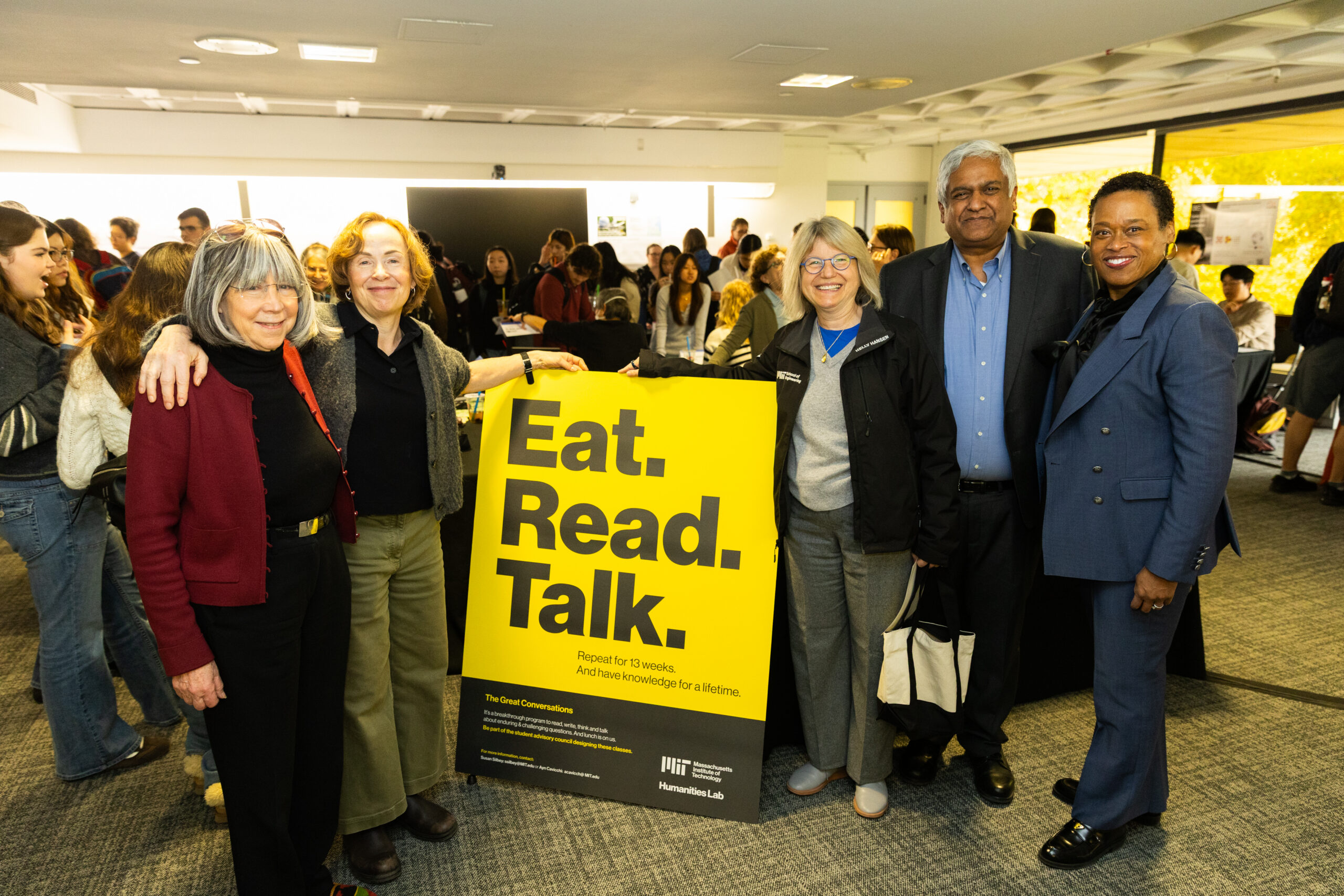
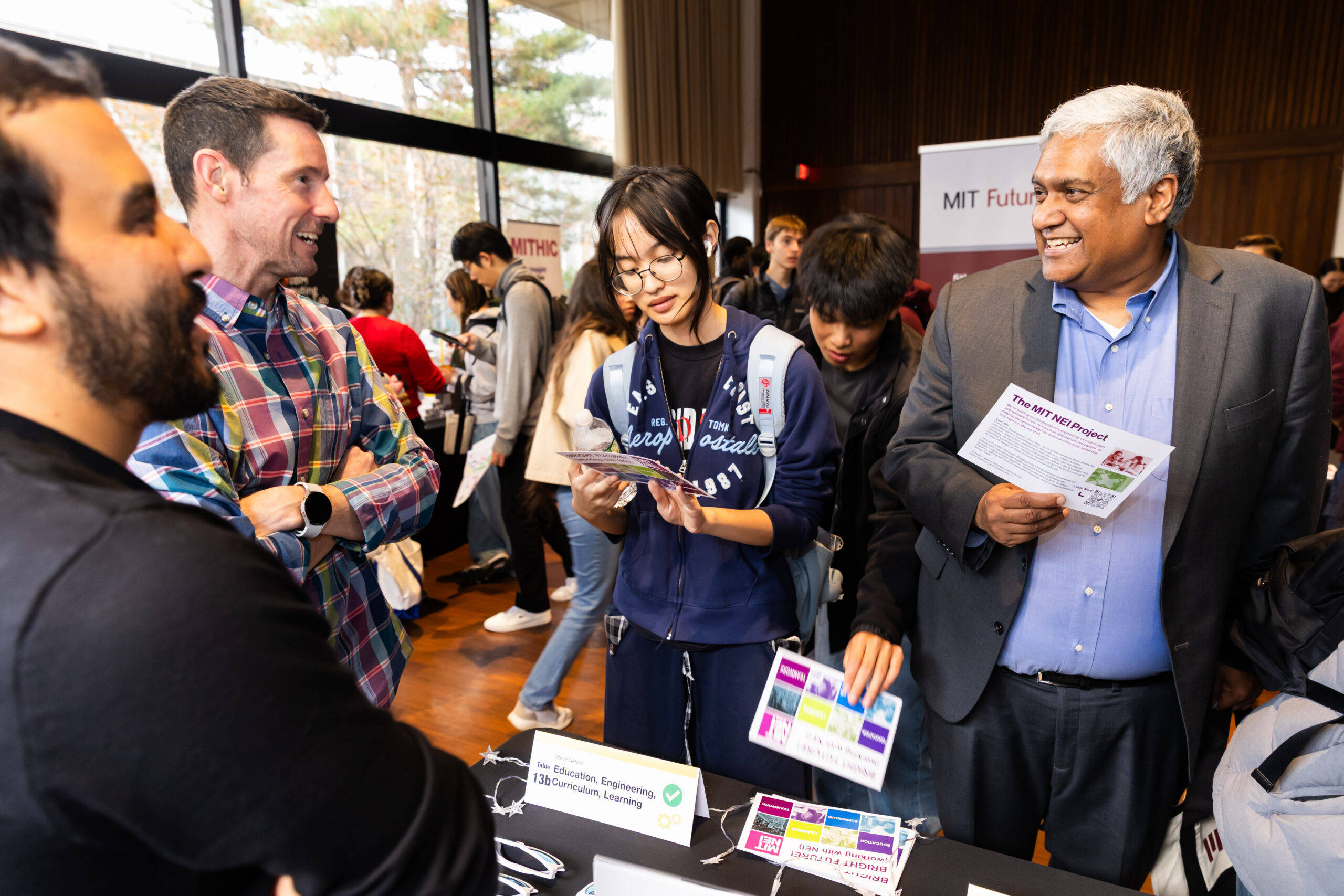
The event drew more than 700 participants. President Sally Kornbluth, Provost Anantha Chandrakasan, and Chancellor Melissa Nobles toured the mixer, talking with researchers and students about the opportunities on display for IAP, and for spring and summer 2027. Given the demand for UROPs, Chandrakasan said that this academic year the Provost’s Office has committed to funding up to 500 new paid UROPs.
Provost Chandrakasan said he was thrilled with the tremendous turnout at the mixer. He was impressed with the breadth of research projects was impressive, and he enjoyed hearing about students’ goals and ambitions.
“This event truly embodies mens et manus — students eager to make discoveries, advance foundational research, and tackle real-world challenges. UROPs are an invaluable part of the MIT undergraduate experience,” said Provost Chandrakasan to The Tech.
Among the first programs of its kind in the nation, UROP began at MIT in 1969 and today hosts nearly 6,000 projects annually. During the 2025-2026 academic year, more than 3,200 undergraduate students and 70 percent of first-year students participated in a UROP. UROPs are popular with undergraduates throughout their careers at the Institute: 94 percent of the members of the class of 2026 took part in a UROP during their time at MIT. Last year, 59 percent of faculty served as UROP mentors.
“UROPs are terrific ways for students to explore their known passion-projects more deeply or to extend themselves in entirely new directions,” said Chancellor Nobles. “Students learn more about research and their interests no matter what they choose!”
Among the students attending the mixer was Course 3 student Nitya Bhaha ’30, who surveyed the Sala de Puerto Rico room on the second floor as she talked with three other first-year students.
“I think this is a good opportunity because as a first-year student it can be a little intimidating to reach out to professors and find UROP opportunities,” said Bhaha. “This is a good way to kind of not only talk to professors for UROPs but also meet more people and network.”
Susan Silbey, the Leon and Anne Goldberg Professor of Humanities, Sociology and Anthropology, said she has had tremendous success with UROPs and had five UROP students working on her research over the summer. Silbey said the mixer was an excellent place to be in proximity to students and that one of her graduate students was also at the mixer stationed in the next room recruiting for their own research.
Vhesal Patel, a postdoc at the Computer Science and Artificial Intelligence Laboratory, said he attended to make connections with students who were excited about the hands-on work in his robotics lab.
“Because I work with hardware and physical things, you oftentimes need people to build things,” said Patel, who hoped the UROP students who join his lab would enjoy the experience as much as he did when he was an undergraduate student.
Several partner organizations also took part in the mixer, including research teams from IBM and GE Vernova, who were recruiting students for their collaborative projects through the MIT-IBM Computing Research Lab and the MIT-GE Vernova Energy and Climate Alliance, respectively.
Among the partners at the event were David Veysset and Giulia Mansutti, researchers from the Wellman Center for Photomedicine at Massachusetts General Hospital, who said they were looking for new students because of their prior success with UROPs. They were recruiting mechanical engineering students for product design and EECS students for signal processing to help develop a new device for retinal imaging.
“We weren’t expecting this many people. It’s super exciting,” said Mansutti.
First-year student Anna Yang ’30, who is studying biology and chemistry, said the possibility of building her skills in a lab to advance her interest in forensics brought her to the mixer.
“It’s nice to be able to come here and see if there’s any labs that would help me gain experience so that I can go into the field I want to in the future,” said Yang.