
Areas of Oversight and Collaboration
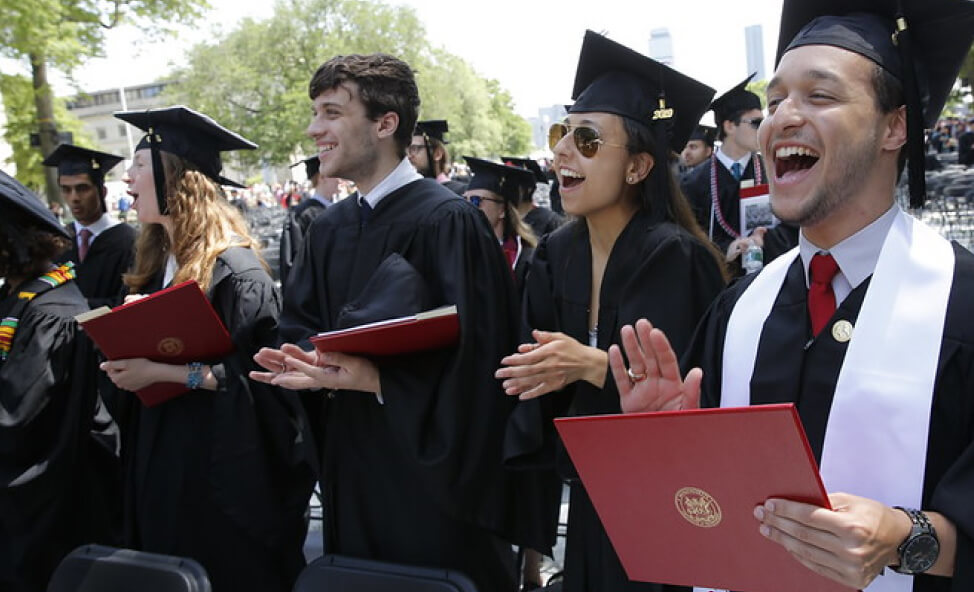
The Provost’s Office team provides advice and counsel to the senior leaders of the schools and colleges, key offices, and affiliated institutes in furthering MIT’s commitment to best-in-class academics and research.
View our org chart01.Schools and colleges#Section link copied to clipboard
-
Bringing together architects, planners, artists, engineers, scientists, and historians, the School of Architecture and Planning (SA+P) addresses problems and challenges in the space between people and their environment.
-
The School of Engineering’s mission is to educate the next generation of engineering leaders, to create new knowledge, and to serve society.
-
The School of Humanities, Arts, and Social Sciences empowers MIT students with political, economic, cultural, and historical perspectives, and also conducts discovery-driven basic research in related disciplines.
-
The mission of the Sloan School of Management is to develop principled, innovative leaders who improve the world and to generate ideas that advance management practice.
-
The School of Science educates students and pursues foundational research in six academic departments — biology, brain and cognitive sciences, chemistry, earth, atmospheric and planetary sciences, mathematics, and physics — as well as multiple institutes, labs, and centers.
-
The Stephen A. Schwarzman College of Computing is addressing the opportunities and challenges of the computing age by supporting the rapid evolution and growth of computer science and AI, facilitating collaborations between computing and other disciplines, and advancing multidisciplinary efforts in the study and practice of socially responsible computing.
02.Key offices#Section link copied to clipboard
-
Institutional Research provides analytical support to the provost, academic departments, and the broader MIT community.
-
The Office of Innovation and Strategy (OIS) advances the Institute’s strategic research, educational, and entrepreneurship priorities. It has launched a number of cross-disciplinary initiatives and programs to drive innovation in key areas. These include: the MIT Health and Life Sciences Collaborative (MIT HEALS), the MIT Generative AI Impact Consortium (MGAIC), the MIT Human Insight Collaborative (MITHIC), MIT Initiative for New Manufacturing (INM), and the MIT Quantum Initiative (QMIT). MIT OIS also includes the MIT-GE Vernova Energy and Climate Alliance and the Tata-MIT Alliance.
03.Affiliated institutes and units#Section link copied to clipboard
-
Axim Collaborative’s mission is to make learning more accessible, more relevant, and more effective for a diverse set of learners.
-
The Broad Institute of MIT and Harvard is a research organization that convenes a community of researchers from across many disciplines and partner institutions—MIT, Harvard, and Harvard-affiliated hospitals—to better understand the roots of disease and narrow the gap between new biological insights and impact for patients.
-
The Engine is a nonprofit incubator and accelerator dedicated to providing early-stage Tough Tech companies with the critical infrastructure, programs, and ecosystem they need to thrive.
-
The McGovern Institute is committed to understanding how the brain works and discovering new ways to treat brain disorders. Researchers study the brain at many levels, from molecular genetics to functional brain imaging, and collaborate with academic, clinical, and industry partners to challenge and probe the unknown.
-
The Ragon Institute was established in 2009 with a mission to harness the immune system to combat and cure human diseases. It leverages collaboration between scientists, clinicians and engineers to break down barriers and transform human health on a global scale.
-
Established in 2007 as a partnership with the National Research Foundation of Singapore, SMART is MIT’s research enterprise in Singapore. SMART enables MIT faculty to take on complex, large-scale advanced research projects in collaboration with colleagues at Singapore institutions.
-
Whitehead Institute’s mission is to forge new frontiers in science, uncovering insights today that unlock the potential of tomorrow.
04.Vice provost areas#Section link copied to clipboard
-
Led by Vice Provost Keeril Makan, the Provost’s Office oversees extra-curricular arts programming, including the List Visual Arts Center, MIT Museum, Council for the Arts at MIT and student arts programs. The Center for Art, Science & Technology (CAST) is a joint initiative of the Office of the Provost, SHASS, and SA+P.
-
Under the leadership of Vice Provost Maria Yang, the Provost’s Office provides intellectual leadership, guidance, and oversight of university-wide strategies and programs to support faculty excellence and advancement, and handles oversight and planning responsibilities for campus academic and research spaces.
-
Directed by Vice Provost Duane Boning, Global MIT represents the Institute’s vision and commitment to international engagement, which is central to MIT’s mission to advance knowledge and educate students in science, technology, and others areas of scholarship.
-
The Libraries, led by Vice Provost and Barbara K. Ostrom (1978) Director of the Libraries Chris Bourg are an engine for creating, sharing, and safeguarding knowledge at the Institute and beyond. The Libraries work to improve access to the world’s collective knowledge and support the MIT community in many ways.
-
Led by Vice Provost Dimitris Bertsimas, Open Learning transforms teaching and learning at MIT and around the globe through the innovative use of digital technologies.
05.Committees#Section link copied to clipboard
-
Develop recommendations regarding the question of fossil fuel industry funding for the Climate Project at MIT.
-
The Building Committee is responsible for long-range space planning and utilization for the Institute and for land acquisition strategy. In conjunction with the Committee for Renovation and Space Planning (CRSP), the Building Committee provides oversight for all aspects of campus planning and stewardship.
-
The committee will assess the potential for MIT to establish an Institute-level undergraduate co-operative (co-op) program to give students access to even deeper, longer-term industry or organizational experience before graduating.
-
CRSP is the Institute’s primary functioning body for making decisions and recommendations about all projects and assignments related to space, planning, and capital projects.
-
The committee will examine and offer recommendations to address both the evolving opportunities and challenges AI presents for teaching, learning, and research training, to position our students to succeed in an AI-powered world.
-
The committee is designed to help MIT evaluate the academic objectives, benefits, and criteria that should inform a potential increase in the number of master’s-only programs.
-
As the Institute’s committee on strategic enrollment issues, the Enrollment Management Group (EMG) is charged with delivering an annual set of four recommendations to the Academic Council:
- Freshman and transfer class size
- Undergraduate and graduate housing, dining and student life fee pricing
- Undergraduate and graduate tuition pricing
- Undergraduate financial aid changes in the context of current strategy and policies
-
Faculty Complaint Review Panel
Members of the Faculty Compliant Review Panel review allegations of policy violations by faculty, and recommend appropriate sanctions if a policy violation has occurred.
-
MIT’s Gift Acceptance Committee is the Institute’s principal forum to evaluate if its philanthropic activities are consistent with the Institute’s mission and values and thereby protect its reputation.
-
The MIT Gift Policy Committee is charged with developing, updating, and distributing policies that inform the solicitation, administration, and recognition of gifts.
-
The Infinite Mile Awards Program for the Offices of the Provost and Vice President for Research is designed to recognize those individuals or teams who have made extraordinary contributions within their own organizations to help the Institute carry out its mission.
-
The ITGC is charged with the following:
- Provide high level oversight for strategic decisions to ensure the IT environment supports the mission of MIT.
- Review and endorse priorities and directions for research computing, major systems implementations and enhancements, cybersecurity, and IT policy at the Institute.
- Steer the Institute to address long-existing, difficult systems challenges.
- Identify and charge sub-committees or working groups as appropriate to complete the committee charge and provide funding and review of progress as needed.
- Advise executive vice president and treasurer and provost on IT matters at MIT.
-
The mission of the International Advisory Committee is to provide a faculty voice in advising MIT’s senior administration on the Institute’s international engagements.
-
The Advisory Board is composed of academic, government, and industrial leaders who assist Lincoln Laboratory and MIT leadership in evaluating and guiding the operation of the Laboratory. This committee meets annually with Laboratory directors and MIT’s provost and vice president for research to review and discuss the strategic direction of the Laboratory.
-
The External Advisory Council provides review and assessment of the progress of the College to the provost, and offers advice and counsel to the dean of the College.
-
MITI (MIT International Board)
MITI’s purpose is to advance the mission and objectives of MIT; conduct, support and facilitate academic, research and related activities; secure and manage funding from individuals and entities within and outside of the United States; and make distributions to and for the benefit and support of MIT.
-
The Office of Innovation and Strategy (OIS) Council includes the faculty and staff leaders for MIT’s strategic initiatives in artificial intelligence, climate and energy, education, health, human insights, manufacturing, and quantum.
-
The Provost’s Faculty Advisory Council (PFAC) provides strategic, informed, and constructive counsel to the provost on matters of importance that affect the Institute’s mission, priorities, finances, and academic community.
-
View past committees and the reports resulting from their work.